

SUCCESS IN 2017: STEP FOUR
Now your head is all sorted out, let's take ownership of our roles and our goals...
We've looked at three steps to prepare for success in 2017 so far:
- Evaluate your biggest life areas
- Prioritise, and evaluate your thoughts and rituals
- Prepare your mind: give yourself permission to be yourself, including accepting your past, and acknowledge what you can and can't change
Today, we're going to look at a really important fourth step, which I'll call ownership.
Own your roles
You hold many roles in life - looking at the different arenas I play in, I'm a husband, a dad, a technical specialist, a boss, an employee, a musician...some of those are more important to me than others. Which of your roles are most important to you?
Now, here's the challenge. Each of those roles belongs to you - you own them. That means that they're yours to do what you'd like with, and if you're not actively owning them, the chances are that things have started to go wrong.
It's easy to come up with excuses for not doing well in a particular role:
I'm sorry honey, I know I'm late home again, but I've got no choice but to stay in the office.
Sometimes (quite often, actually!) an excuse like that is a symptom of a lack of ownership. You're very rarely in a situation where you genuinely have no choice. You could choose to leave the office on time, and perhaps it would cost you a promotion, but which role is more important to you?
Let me tell you from experience: once you've decided up-front what your most important roles are, the tough calls become less tough, and you start to own them a whole lot more.
Own your goals
Now we get onto the exciting bits. Do you really want to see success this year? Set some big goals. Where do you want to be by 31 December 2017? How about by 2020?
Now, let's reverse engineer those, laying them over the rituals we talked about two weeks ago. What new rituals could you put in place that would point you in the direction of those goals? What would you have to do every day, every week and every month to achieve them?
And here's the secret:
Put them in your calendar.
Let's be silly for a moment. Perhaps you're single, but would like to be married. If you went on a date every night for the next six months, do you think you'd be closer, or further away from getting married? Of course you'd be closer! Of those dates, some of them may have been awful, you may miss a couple, and some you may have ended up going out with people you'd never normally choose to go out with, but who knows?
Give it a go. Set some big goals, with hard deadlines, and create some rituals today.
You can do it.

SUCCESS IN 2017: STEP THREE
We've created a to-do list for some short-term success...now, what attitudes will lead to success that really lasts?
Over the last two weeks, we've looked at a structured approach to prioritising life choices, and started to build an action plan to change. I hope you've started to experience a greater sense of vision, control and achievement...but we've barely scratched the surface of true, lasting success.
It's good to create a to-do list, and it needs to be supported by an attitude that turns those one-off actions into natural habits. So let's set to work on that.
Who are you?
We're bombarded every day by messages telling us to conform to other people's view of what good looks like. That might mean having a body that's a certain shape, earning a particular amount of money, living in a certain place, wearing certain clothes...
A lot of dissatisfaction in life comes from putting expectations on ourselves to be someone that we're simply not. The Bible says, "Do not be conformed to this world" (Romans 12:2), and Oscar Wilde said:
Be yourself, everyone else is already taken.
So let me encourage you to do two things:
- Ask yourself who you really are - what you're really like - and how people try to make you be someone different. Now, resolve to simply be yourself.
- Write down a list of life experiences that have made you who you are today - good and bad. Now, accept that you can't go back in time and change them. You are who you are, and where you are, today, because of them.
What can you change?
Over the last couple of weeks, I've written a lot about things you can do to make a difference. And I expect you've thought at some point: "I can't change [enter your own circumstances here]."
Our lives are affected by the decisions of others, including our bosses, friends, family, politicians, and simple circumstances. And we can't change a lot of that. If there won't be a chance to be promoted until your boss quits, there's nothing you can do about that!
Your satisfaction will increase when you properly realise that you can't change everything.
And here's some even better news...there are some things that you definitely can change. What are those things you've always said that other people do that you can't? What would happen if you realised you could?
Maybe it's waking up half an hour earlier every day to learn a new skill, or a language, or to pray, or to read the Bible? Maybe it's building a budget...and sticking to it!
You will see greater success when you properly realise that you can change some things.
So we've looked at understanding and prioritising the most important areas of life, we've looked at our daily thoughts and rituals, and now we've looked at the attitudes that underpin those. Next week, we're going to take it to the next level, by taking proper ownership of our own lives.

SUCCESS IN 2017: STEP TWO
Continuing this series on having a successful 2017, let's look at our thoughts and rituals to see where life is currently heading...
While we're still in January, I thought it would be helpful for us all to walk through a life assessment and action plan together. I wrote last week about the five life indicators of health, relationships, vocation, emotions and lifestyle - if you've not read that yet, I'd recommend starting there first.
This week, we're going to dig a bit deeper.
Question 1: which of the life indicators is most important to you?
During last week's exercise, which of the five stood out to you the most? What got you the most excited or frustrated? Which matters the most?
Now, what decisions do you need to make to prioritise that area over the others?
Question 2: what is your thought trajectory?
This may take a while, because I'd like you to think about what you think about. What thoughts do you find yourself thinking most often? When you're thinking about yourself, are your thoughts along the lines of "you should do better", or "you can do it!"? What false or unsubstantiated thoughts do you find yourself thinking the most? What thoughts would you like to think more often - and how could you make that happen?
Question 3: what is your ritual trajectory?
A lot of people don't like the word ritual, but it just means repeated behaviour. What sort of thing do you find yourself doing most often? What takes up your time on your commute, or at weekends? What do you do first thing in the morning and last thing at night?
Now, if you continue with those rituals, where will they lead you? Will they make you a better person? Or are they pointless wastes of time? What could you change about those rituals?
Next steps...
We spent last and this week looking at what could change in our lives, and hopefully by now we all have good, measurable to-do lists that we're starting to tick off...but life isn't as simple as a checklist.
Next week, we're going to pick up on those areas that we can't change, because life is bigger than constant activity!

MAKE THIS YOUR FIRST STEP TO SUCCESS IN 2017
At the beginning of 2017, join me in evaluating five life indicators, and let's achieve success together...
London is a busy place.
I'm not the first person in 2017 to notice that people in London are impatient, walk fast, drive close, demand convenience...and are driven to succeed.
I don't think I've met anyone since moving to London who's said:
Do you know, my life's not perfect, but I'm fine with accepting that.
More often, I encounter:
Life is great...but I still want more!
I believe that there's a big challenge to Londoners to become content with what we have, because the chances are that the challenges you and I face are real first-world problems...but equally, there's nothing wrong with setting ambitious goals and achieving them.
The year is young, and who knows what you might turn it into?
Come with me on a journey of self-discovery and future building. I'm going to post a series of blog entries walking us through some exercises I hope you find helpful.
In this first entry, we're going to dig into the five life indicators:
1 Health
Did you know that often, the most successful people in the world are also really healthy? Getting a good amount of sleep, drinking lots of water and eating healthily will all contribute to your ability to making lasting change.
2 Relationships
Who are your key relationships with? Who would you like better relationships with? Who would you like relationships with that you currently don't have? It's funny that the people with the best friendships tend to just be the friendliest people - we can all learn a lesson and be friendly.
3 Vocation
What takes up the most of your time? Is it a job, or a role in the home, or a role in society? What could you do that would make you feel more fulfilled in that?
4 Emotions
What are the three emotions you feel most of the time? How positive are those words? What could you do that would create more positive emotions?
5 Lifestyle
Where does your time and money go? How satisfied does that answer make you? How could you improve that?
Next steps...
I'd really encourage you to write down your answers to the questions above - it should lead you to a nice to-do list.
But the work's not done yet! Keep your eye on the blog, because the next entry in this series will be appearing in a week.

HERE IS WHAT TO DO IF YOU DON'T ENJOY YOUR JOB
I watched a video on career management the other day, and I'd like to share it's big message with you...and why I disagree with it.
I saw a video on Facebook the other day – it was headlined as something like ‘the most important thing you’ll see all month’, and I respected the person who had shared it, so I gave it a quick view.
The message of the video was essentially this:
You are going to be at work for the vast majority of your life, so make sure you’re doing something you enjoy.
This message rings true with me, as I’m sure it does with you. I don’t like the idea that I’m going to spend 40 years doing something with no purpose other than to get money to pay for stuff I can barely squeeze into my spare time.
Even if you have a stand-out ‘successful’ career and earn millions, if that’s only then used to fund a house and a family you barely see, what point is there to that really?
It all comes down to this:
Your life will be better, and you will be happier, if you’re doing something you love, even if that means taking home less money at the end of the month.
I agree.
But I don’t agree with the practical advice this video gave, which was ‘make sure you’re doing something you enjoy.’
Huh?
What would happen if we spun that around, to say instead:
Make sure you enjoy what you’re doing.
If I’m doing something I don’t enjoy, that turns me into a victim. This job is happening to me, and I’m subject to my evil boss’s nasty commands.
But if I’m not enjoying what I’m doing, that puts me in a position of power. I can solve this problem, by changing my attitude.
Instead of answering the questions of what else I could be doing that would make me happier, I’m answering the question of what I genuinely enjoy about this job I’m in. That feels a lot more positive – doesn’t that feel better?
I see the Bible telling us to be content with what we have, and I don’t see the Bible telling us that satisfaction lies in grabbing at things we don’t have.
Homework for today then: Write a list of the 100 things you most enjoy about your job, then if you bring it along on a Sunday morning and share it with me, I’ll share mine with you.

IS IT WORTH THE WEIGHT?
Are you carrying around the weight of psychological or emotional baggage?
Great news: a new career option is available to ladies!
A significant change was made recently to the roles available to women in the British Army. Up until recently, women have been able to make a contribution alongside their male counterparts across various roles in the army, apart from certain frontline combat roles like the infantry and tank units. A number of people believe that having women in these roles is not a good idea, while others have suggested that there should be no restrictions to what women can do in the Armed Forces.
The Government carried out a review of the involvement of women in these frontline combat roles and has come to the conclusion that women should be allowed to serve in these roles if they demonstrate ability to pass the test for entry into these units. As you can imagine, the tests for entry into these units can be very rigorous. I recently looked up the physical test for some of these combat roles. A person would have to carry 25kg of weight and run for 8 miles in military boots. This is no small challenge, even if you are used to carrying a heavy rucksack (or handbag) around. For a lot of people, even running the 8-mile distance in running shoes will be a challenge. If you have carried anything heavy for any distance, you will be familiar with the fact that the same amount of weight starts to feel heavier the longer you carry it. This is because the weight begins to take its toll on the body and the body's ability to carry the weight diminishes over time….do you reckon you have what it takes to pass the infantry test?
I cannot see a huge influx of women rushing to join the infantry in the wake of this change in government policy. One publication estimates that the proportion of women likely to pass the current test will be less than 5% of those currently in the army. Although there are many reasons why women may not be joining the frontline combat units, the biggest reason is that the army is an organisation that is joined on a voluntary basis; no-one will be compelled to take the test to see whether they have what it takes to join the infantry. It means that most women or men will never know or care to know what it feels like to carry 25kg over 8 miles in military boots.
Having said that, many people will be familiar with the feeling of carrying emotional and psychological weight for many years.
Many people feel guilty about what they have done. Others are suffering from the guilt of what they failed to do. Some are struggling to come to terms with the actions taken by others but which have left them carrying a burden that has been difficult to shake off. Does this describe your situation?You may not be surprised to hear that, like physical weight, the effects of carrying emotional and psychological baggage can become more pronounced over time. For some, it may be the damage it has done or is doing to relationships. For others, it may be the toll that it is taking on one’s physical health or emotional wellbeing. In Psalms 32 and 38, David the psalmist wrote about some of the physical symptoms that guilt was causing including physical weakness and pain. Can you see how emotional and psychological baggage is starting to take its toll on your life?
Are you tired of carrying the weight from your past? Would you welcome some relief? Jesus offers you relief today if you are willing to accept it. He invites you to cast your burdens on him and he will offer you rest (Matthew 11:28). This is an offer that many have taken and can confirm that their burdens have been lifted. The infantry test requires you to go through the full demands of the grueling experience to secure entry into life as an infantry soldier. In contrast, by turning to Jesus with your life and all its burdens, you give yourself a real opportunity to enter into a new life...life in all its fullness!

SIR ANDREW PUT ALL HIS EGGS IN ONE BASKET, AND SO DID I. WILL YOU?
The global headquarters of one of the biggest pharmaceutical companies in the world is at the bottom of Boston Manor Road.
Did you know...the global headquarters of one of the biggest pharmaceutical companies in the world is at the bottom of Boston Manor Road.
GSK produces medicines, vaccines and consumer products. It has a strong heritage of innovation in healthcare, and its CEO, Andrew Wittty, was knighted in 2012 for services to the economy and the UK pharmaceutical industry.
I read in the Financial Times recently that the company recently began searching for a replacement CEO. Witty has spent his entire career at GSK and has been CEO for eight years.
Witty is a home-grown talent, and at 51 years old is still relatively young - why would GSK allow him to leave?
This article claimed that under Mr Witty’s leadership, the company has faced challenges, including a bribery scandal in China and financial performance that some people are not impressed with.
But a GSK took a very bold strategic decision that got some strong voices to begin to call for change.
GSK decided to swap its cancer drugs for vaccines and consumer goods. They reasoned that GSK would be in a better place commercially with high-volume, low-price products. Cancer drugs have a higher price per unit, but many obstacles stop them getting approved and sold for profit.
Mr Witty took the company’s ‘eggs’ out of the cancer treatment ‘basket’ and put them in the vaccine/consumer goods ‘basket’, going against the general thinking in the industry and the shareholder community.
Mr Witty remains confident that his strategy will pay off, but he appears to have bet on it with a career of over 30 years and the leadership of the company where he spent his entire career.
Time will tell if he was right or wrong.
Have you ever taken a risk and put all your eggs in one basket?
What was the outcome of your decision?
I once put all my eggs in one basket. As a student, I was involved in a competition where we formed a team, and bid for the opportunity to solve business problems for companies.
We could only bid for a maximum of three projects, and once we accepted an offer we had to exit the entire bidding process. There were six in my team, and two people were responsible for each project that we were bidding for.
We were successful in securing the first two projects that we went for.
The problem was that our third pitch, to be held the next day, was for the project we really wanted, and I was the leader for that pitch. We had to decide, that day, whether to play safe and keep one of the two projects that we had already secured, or give them up and gamble on getting our first choice.
I had a dream about our first choice project; I woke up, prayed about it and was confident to go for it.
Despite my attempt to persuade the team, the other team members were unsure, so we took a vote. The vote hung on a knife edge at three votes to two. The last member of the team finally cast his vote in favour of taking the gamble; we rejected the two secured projects, and I had two very important jobs to do.
- I had to call the bid coordinator and reject the two secured projects.
- I had to lead the pitch for our first choice project.
Once I did the first task (not an easy conversation), the second task became easier.
We were all united…the only acceptable outcome for us was to win that bid!
I delivered the pitch, we got the project, and were given £20,000 to do the work. We had put our eggs in the right basket!
At some point in our lives, we will all be faced with big questions.
To what cause will you devote your life?
In whom will you put your faith?
There will be alternatives to consider and a decision to be made, with each alternative presenting its own set of benefits and consequences. Not making a decision is one of the options, with its own benefits and consequences.
So how will you make your choice?
If you like looking at evidence as a basis for decision-making, look at Jesus.
Like Mr Witty, he was a leader who devoted his entire public ministry to providing health solutions, catering for the spiritual and physical wellbeing of the people. Like Mr Witty, he upset the leaders of his community with his recommended strategy for success.
Jesus made a number of bold claims including the suggestion that he can deliver a fulfilled life, give peace, provide hope, and that he is the way to God.
Jesus said that everyone who wants access to God should put their faith in him.
He also said that he would die and be raised from the dead. The leaders of his time finally had enough and put paid to his career by executing him.
Mr Witty’s legacy remains in the uncertain hands of history, but Jesus’ legacy is secure.
True to his word, he died and was raised from the dead after three days, regularly remembered by over a billion people all over the world.
If you are looking for a proven basket in which to put your eggs, choose Jesus.

FOUR WORDS THAT WILL TRANSFORM THE WAY YOU DEAL WITH PEOPLE
I've discovered the secret to getting on with anyone...
It is what it is.
That phrase is used a lot in my workplace.
It's one of those silly work sayings that means nothing until you're in work, and then it means everything. Just like:
- Let's touch base.
- Let's take that offline.
- We really need more of a helicopter view.
- Let's focus on the low hanging fruit.
- We can get back together once we've got all our ducks in a row.
But I like saying that it is what it is. It makes me feel better when making a decision that brings a down-side with it.
- Getting someone in to look at our oven costs a lot? It is what it is.
- Taking a Thursday off to help at Crafternoon leads to an extremely busy Friday? It is what it is.
- Grocery delivery ran out of bread? It is what it is.
But for Anna - my wife - the phrase is more than a touch ridiculous.
Of course it is what it is! What else would it be?!
But sometimes putting language around something can help to define it, and help us to understand it.
This is particularly important when it comes to relating to people. People are all unique, but using language to describe common features can be helpful in understanding why some people are so unique!
So allow me to categorise everyone in the whole world, using a model developed by Roger Reid and John Merrill.
Begin by thinking about whether you prefer to talk or listen, and whether you prefer to deal with people or facts.
- Talking + people: Expressive. You enjoy being centre of attention, laughing a lot, and team games. Pictures on slides are much more fun than words, and the only good thing about spreadsheets is making pretty graphs that tell a story. People may perceive you as being flippant.
- Talking + facts: Directive. The motto you give your people is ‘Be brief, be bright, be gone.’ You like to look at the big facts, tell people what you think, and expect them to act on it. You’re ambitious, and people can sometimes perceive you as being arrogant.
- Listening + people: Amiable. You don’t like being put under lots of pressure at work, but can be a dependable part of any team. You prefer stability over change. You’re the person who likes to get to know their colleagues at a personal level. Everyone who meets you thinks you’re nice…but perhaps the perception is that you’re not quite motivated enough.
- Listening + facts: Analytical. You’re a details guru. Your strength isn’t in thinking on your feet, but give you five minutes with a spreadsheet and you’ll pick flaws in anyone’s idea. Some people perceive you as being socially awkward.
Don't worry if you don't like being categorised like this, that's because you're Analytical. (Jokes.)
I find this model really helpful, but there's something I've found even more helpful when dealing with people.
Just be friendly.
I've discovered that the secret to getting on with anyone is just to be friendly - everyone likes that!
I'm sorry, but it is what it is.
And I have the perfect offer to make you, to allow you to be friendly.
Redeemer is about to open up registration for the new set of meetups. Sign up for one as soon as you can.
Don't miss out!

DISCOUNTED: HOW TO DEAL WITH THE OPPORTUNITY OF A LIFETIME
I've worked here for 21 years. Is it lack of imagination or ambition on my part?
I work in a large firm.
3,000ish staff.
I've been here for 21 years now, which regularly raises eyebrows. Is it lack of imagination or perhaps lack of ambition on my part? Neither, I just enjoy my work.
But I need to watch myself, make sure I'm not limiting my options.
I'm conscious that sometimes it's all too easy to look on at colleagues who've made a successful career move and discount myself from a similar move.
Is it just the risks involved with moving that have made me decide that it isn't for me?
(One of my former colleagues is now acting CEO here, another is 'vice-president' at a big bank.)
When opportunities come up at the office, I find myself wondering: Is it a career-limiting task that'll set me up for a fall? Or is it a chance to break out of a rut?
When I have a chance to move on, I ask myself: Is it just that the grass tends to look greener or is this the opportunity of a lifetime?
Sometimes the offer of change comes from a long respected colleague, and so the trust they show in my abilities (which far exceeds my own) is enough to prompt me to take the plunge.
I'm challenged by the decisions that the first disciples of Jesus took when faced with change. He asked them to uproot from their established career choices and to trust him to lead them on a more worthwhile (but untested) path.
Here's what I imagine might have gone on in one of the young disciples' heads at this crossroads.
'His father must be WELL pleased.
What dad wouldn't be? He's learned a trade, been good to his mum, and remembered what his dad taught him: Treat everyone with respect.
He's got a good 'ed on his shoulders, does Jesus. Always did. Caused him a little trouble in his younger days mind; other kids didn't know how to take him. But his good nature won out; he was well liked by those who got to know 'im. A solid bloke.
And now he's off on his new venture. It's good to take risks every now and then, get out yer comfort zone, cut off the old apron strings.
He'll need some good people around him mind, guys he can trust. You know what I mean - solid, with the right attitude. I mean, stands to reason someone with 'is vision won't wanna take on any old Tom, Dick or 'arry. He's got his reputation to think of.
I wish him well, losing his step dad early like that, guy deserves some better days.
'Ere he is now, "Nice to see yer, squire...
-
"Wassat you say? Who, me? No mate, you're 'aving a laugh. I'm not your entrepreneurial type. Got family commitments, my dad's business. I know it's not much, but it's...
-
"Really? You sure? ...
-
"Course I trust your judgement, it's just a little unexpected...
-
"Well in that case, it'll be an 'onour, sir. Lead the way.
"By the way, can my bruvver come?"
Ring any bells?
When you are faced with life changing decisions, how do you respond?
Do you consider the benefits or the costs first? What wins out?
Do you have someone you can trust to help you decide?
Try Jesus, his judgement can be trusted.

HOW CHANGING ONE THING UNLOCKS LEADERSHIP OPPORTUNITIES
I experienced something frustrating at work recently, but it reminded me of a lesson I learned a few years ago...
I experienced something frustrating at work recently.
I had asked someone to finish some work for me by Friday. Friday came and went, and no work was forthcoming.
The next week, he promised it to me by the next Friday. I tried to call him that Friday to make sure that was still going to happen, but he’d gone on holiday!
I was now being chased heavily by my boss, so the week after I made it clear the work really needed doing…and he said he couldn’t do it because he was now busy with other things.
This guy was fast becoming an expert in making problems for me.
And I realised that a few years ago, I’d been exactly the same.
I learned a tough lesson when I first started being given responsibility:
People don’t want to work with you if you create more problems than solutions.
So in my story earlier on, the problem wasn’t just that the work was overrunning, it was the broken promises and then simply saying: ‘It can’t be done.’
Instead...
- He could have said at the outset that he didn’t have the time.
- He could have suggested someone else to do the work in his place.
- He could have explained that other work would stop him from finishing, and introduced me to his other bosses.
Each of us will encounter situations where others’ expectations of us are unrealistic.
The key to turning those false expectations into realistic opportunities is to:
- Explain why there’s a problem, and what it is.
- Suggest a solution that they’re free to challenge.
- Make a promise that you know you can keep (and probably beat).
Doing this does three clear things:
- It proves that you understand that person’s needs, and how important it is to meet them well.
- It gives you control where before you had none.
- It allows you to now exceed expectations by over-delivering against your own promise. Where before you were guaranteed to lose, you’re now guaranteed to win!
So how about we resolve today to turn from Problems People into Solutions People?
And allow me to give you an instant opportunity to practice!
It’s easy to spot problems in something like our Sunday morning meetings – and we have a constant desire to improve them.
Why not suggest a solution to a problem you can see, take ownership for it, and get some experience leading?
See you on Sunday!
WHAT STARTING A NEW JOB IN LONDON TEACHES US ABOUT BEING A CHRISTIAN
Starting a new job in London can be intimidating, but I've found the answer...
Starting a new job can be intimidating.
After many years being part of the furniture in my previous job, I now find myself surrounded by people who know the environment, and each other, really well.
I've started apologising for having to ask where things are in the kitchen, who has the key to the stationery cupboard, who to ask to get business cards sorted, and what number to call for IT.
I still haven't found the quickest route from the tube station.
And working in London brings its own challenges. My new boss is really busy and expects me to be productive even though I've barely finished my first week.
But I've found the answer.
There's one thing that's going to open up opportunities for success here, and it's disappointingly obvious.
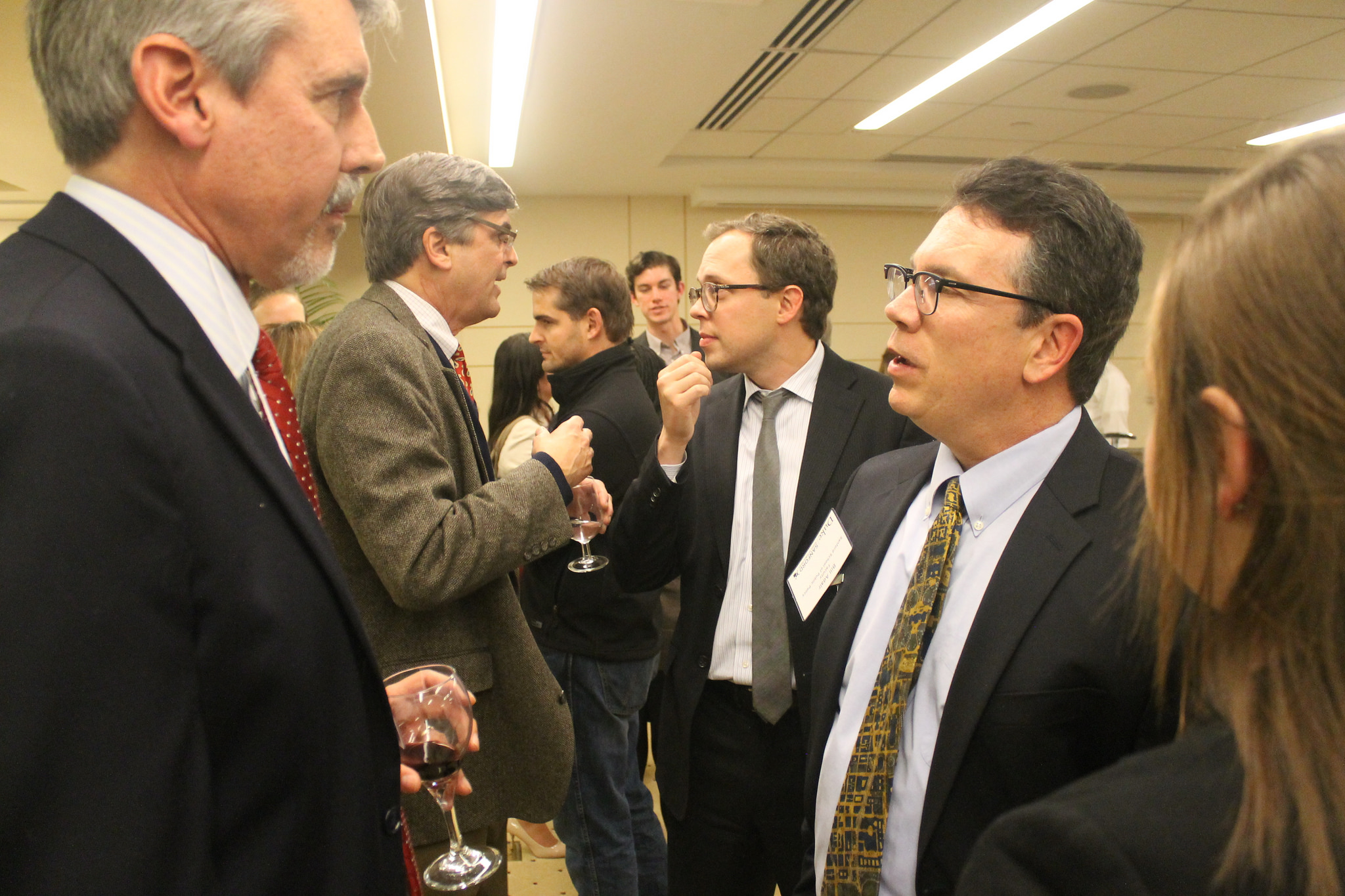
Become friends with people.
I know, that's nothing to do with work, but if I'm surrounded by friends, this intimidating scenario flips on its head.
Suddenly, it's easy to ask questions, because they're my friends, and it's just nice to hang out with friends, isn't it?
In business this is called networking. But people hate that word.
If you hate that word, I'm sorry for what I'm about to say: Jesus wants us to be experts at networking.
Jesus said that the single biggest indicator to the world that we know him is that we're best of friends with one another (John 13:35).
Let me encourage you then to make friends!
Two easy ways to do this:
- Join a Meetup! This one's a #nobrainer. Click here, and register today.
- Just ask someone to come over for a meal. Or drinks and snacks. Or go out for a coffee. Or go bowling. Or go watch a film. Or go for a walk. Or whatever.
Want friends? Be friendly. And enjoy yourself doing it!